Small-Ship Alaska Cruises 2026: Kayaking, Skiffs, Photo Workshops
If your ideal Alaska morning starts with slipping quietly into a fjord in a tandem kayak instead of fighting a crowd on a big-ship viewing deck, small-ship expedition cruising is built for you. The difference is not just scale, it is access: smaller hulls, Zodiacs and skiffs put you into corners of the coastline where wildlife, silence and light are most generous, and many lines add National Geographic photographers or certified photo instructors for extra value.
Geek Tip: If a photo workshop or a kayak-heavy itinerary is your priority, ask the operator which departures are explicitly labeled photo-focused or kayak-first before you pick dates.
What small ships do differently
Small-ship expedition lines working Alaska in 2026 range from purpose-built expedition yachts to intimate coastal vessels carrying roughly 40 to 80 passengers. Across the research package, operators such as UnCruise Adventures promote daily paddles, skiff exploration and adaptable itineraries; Lindblad Expeditions continues its National Geographic partnership, placing photographers and certified photo instructors on many departures; and regional operators such as Alaskan Dream Cruises operate smaller shallow-draft vessels that can reach quiet coves and private beach landings.
That operational mix produces three practical advantages: the ability to anchor or navigate narrow passages, more frequent Zodiac or skiff swings to shore, and a higher ratio of expert staff to guests who lead interpretation, photography clinics and active excursions.
Why it matters in the field
Smaller vessels can reach places mainstream ships simply cannot, which means fewer other people in your frame, more opportunities to hear the water and wildlife, and often a more tactile, active day-to-day program. Operators emphasize guided kayaks, skiff landings and hikes as core elements of the experience, which is exactly what many photographers and active travelers are after.
Operators to consider
- UnCruise Adventures: Product pages and the operator brochure describe kayak-first, activity-focused itineraries that regularly include daily paddles, skiff tours and photo-focused departures. See the Wild, Woolly and Wow with Glacier Bay itinerary for an example of their product positioning, and reference the 2025-26 brochure for fuller program language. Source: UnCruise Adventures product page and brochure, provided in the research package.
- Lindblad Expeditions with National Geographic: Lindblad highlights National Geographic photographers and certified photo instructors on many expedition departures, and regularly lists kayaking and Zodiac excursions among the standard activity choices. The Lindblad National Geographic campaign pages summarize this partnership and the photography programming for 2026 departures.
- Alaskan Dream Cruises: A regional operator that illustrates the smaller end of the small-ship spectrum; product pages show kayak and lodge-visit programming on Glacier Bay and coastal expeditions.
- Other boutique operators and brokers: Aggregators and brokers such as AdventureSmith and Adventure Life list additional boutique expedition lines and help compare vessel sizes, activity emphases and included gear across carriers.
Signature activities: what to expect
Kayaking
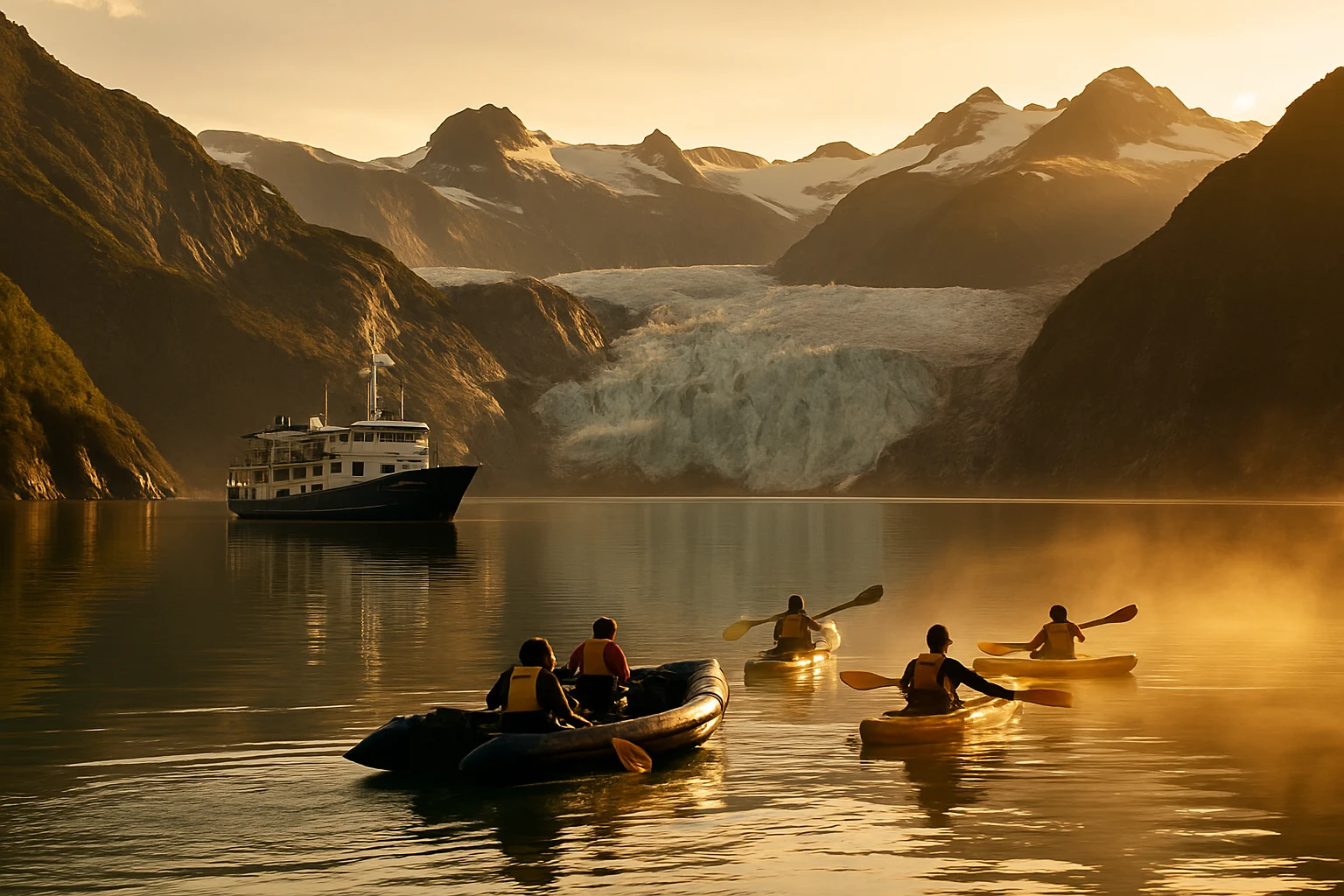
Kayaks are a central draw for many small-ship itineraries. Operator materials describe guided paddles as daily options on active itineraries, often leading guests into coves, past tidewater glaciers and through wildlife-rich inlets. Check whether kayaking is included in the base fare or treated as an add-on, and verify what protective clothing or drysuit options are supplied.
Skiff and Zodiac landings
Skiffs and Zodiacs do the practical heavy lifting of expedition cruising: they ferry guests to shore, put photographers into low-angled water positions, and are the tool of choice for getting close to glacier fronts and marine wildlife. Their use depends on water, weather and park permit windows, but research materials consistently list Zodiac and skiff excursions as core program elements across operators.
Photography workshops and instructors
Lindblad’s National Geographic partnership explicitly advertises photography instruction with certified instructors and National Geographic photographers on many departures, which is especially valuable for travelers who want guided shooting opportunities and image feedback at sea. Some operators schedule photo-focused departures as premium experiences; verify whether clinics are included or offered as optional add-ons for your chosen sail date.
Seasonality and timing
The Alaska small-ship season runs primarily May through September. May and September are shoulder months that often offer lower crowds and different lighting and color than high summer, while mid-June through mid-August brings the warmest weather and the most daylight. Use shoulder months if you want fewer people and better cabin availability, and prioritize June to July for peak wildlife viewing in some areas.
The Glacier Bay factor, permits and park rules
Glacier Bay National Park is a marquee destination on many Alaska expedition itineraries, but the Park Service controls commercial access. National Park Service materials and the Glacier Bay compendium confirm that commercial vessel permits are required and there are daily limits on charter entries in the busiest months. Concessioners authorized by the park may operate non-motorized programs and shore activities under concession contracts, which affects how much time each vessel can spend inside the Bay.
Geek Check: If a visit to Glacier Bay is nonnegotiable, ask your operator for written confirmation that the departure you are considering has the necessary permit or scheduling allocation, because permit windows and daily allocations shape itinerary timing and shore activity availability.
What is usually included, and the questions to ask
Inclusions vary by operator and by itinerary. The research package shows UnCruise promoting multi-day active itineraries with kayaking, skiff tours and guided hikes as typical daily options, while Lindblad highlights photography staff and Zodiac explorations among standard choices. Before you book, confirm:
- Is kayaking included in the base fare, or is it an optional paid excursion?
- Are photography clinics part of the standard program or a paid add-on, and which instructor or photographer is confirmed for the departure?
- What gear is provided by the operator, and which items you must bring yourself, for example paddling jackets, waterproof layers, or specific camera lenses?
- What are mobility and medical requirements for shore landings and kayak access?
Safety, wildlife etiquette and local rules
All reputable expedition operators run mandatory briefings that cover boat safety, landing procedures and wildlife etiquette. The Alaska Department of Fish and Game provides living-with-bears guidance and the National Park Service publishes visitor safety rules, both of which operators incorporate into shore protocols and briefings. If you plan hikes or close animal viewing, follow guide instructions, respect posted viewing distances and use bear-aware practices including carrying bear spray if recommended by guides or local authorities.
Packing and camera tips for small-ship expeditions
Pack in layers for variable coastal weather, and prioritize waterproof outer layers and warm base layers. For photography, a telephoto lens is useful for marine mammals and shore birds, while a wide-angle lens helps with glacier and landscape compositions. If you plan to kayak, verify operator rules for onboard camera use, and consider a float strap or drybag for camera gear when on the water.
Who should choose a small-ship expedition, and who should not
- Choose small ships if you want instruction-led photography opportunities, daily kayaking and intimate group sizes for wildlife viewing; the research supports Lindblad and UnCruise as operators that emphasize these elements.
- Choose a big ship if you prefer guaranteed large inventories of balcony cabins, a wide range of on-board entertainment independent of weather, or lower per-cabin starting prices through larger-scale economies.
Booking and timing strategy
For peak summer dates in June and July, book early to secure preferred cabins and specialty departures such as photo-focused sailings. Shoulder months, May and September, can offer quieter mornings, different light and better cabin availability.
Geek Move: If your schedule is flexible, target a shoulder-month departure labeled as photo-focused or kayak-first; you will often find the best balance of availability, quieter waterways and strong photography light without the crowds of high summer.
Sample trip lengths
A 7- to 10-night expedition usually provides enough time to include Glacier Bay or Tracy Arm visits combined with multiple kayak and skiff excursions. Shorter voyages are possible for specific coastal legs, while longer voyages may link Alaska with British Columbia or remote regional stretches for deeper exploration.
Final practical checklist
- Confirm activity inclusions, instructor assignments and gear policies when you book.
- Verify Glacier Bay permit confirmation if that visit is essential to your itinerary.
- Pack layered waterproof clothing, waterproof footwear and camera protection for on-water use.
- Allow buffer time for flight connections to and from small-ship embarkation ports, and ask operators about their transfer recommendations.
Small-ship Alaska expeditions are not just a different boat, they are a different way to travel the region: quieter mornings, closer access and active days that reward attention and patience. For photographers and active travelers who want to trade large crowds for a kayak at dawn, these operators deliver a distinct, access-rich experience.
That is the Getaway Geek move: spend smarter, travel better.
Travel information, prices, availability, requirements, and policies were accurate when researched and may change. Confirm current details directly with the relevant provider or official source before booking or traveling.